
Six Minoan centres, one shared history
Knossos, Phaistos, Malia, Zakros, Zominthos and Kydonia form the group inscribed by UNESCO in 2025.
More than one palace
Knossos is one of the six component sites of the Minoan Palatial Centres inscribed on the World Heritage List in 2025. The group also includes Phaistos, Malia, Zakros, Zominthos and Kydonia. They are separate archaeological sites in different parts of Crete.
What to look for
UNESCO describes them as centres of administration, the economy and religious life. Courtyards, storage rooms, the layout of buildings and evidence of writing help you imagine how society worked, beyond the striking sight of a palace. Choose one question for your first visit: how did people move through the site, where did they gather, or how did they organise their activities?
At Knossos, look for different layers of history
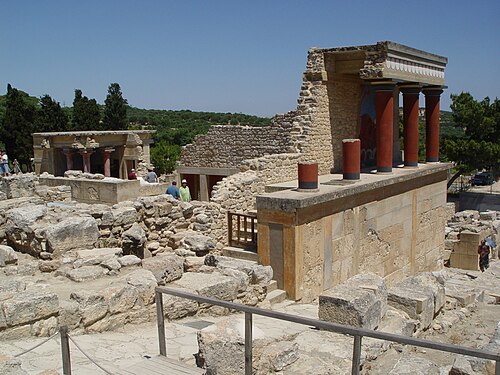
UNESCO itself points out the extensive reconstruction carried out at Knossos in the early 20th century. Use the site interpretation to distinguish ancient remains from later interventions as you look at what stands today. The photograph shows the site in 2006, including a reconstructed part of the north entrance. The Minoan building has changed over time.
Give each visit time
The shared inscription does not guarantee a common ticket, uniform hours or the same visiting arrangements for all six sites. Check with the authority responsible for your chosen site before setting out. We suggest taking time to explore one place first, then saving the others for another chapter in the same story.
Sources and scope of review
Sources consulted . UNESCO inscription year: 2025. Decision 47 COM 8B.25 of the 2025 session. The review covered the specific descriptions and designations. Current opening hours, tickets, transport and outdoor conditions were outside its scope.
Full introductory section on Crete in Greek · Greek original